
Vinous recensisce i vini Montioni
V i n o u s r e c e n s i s c e i v i n i M o n t i o n i
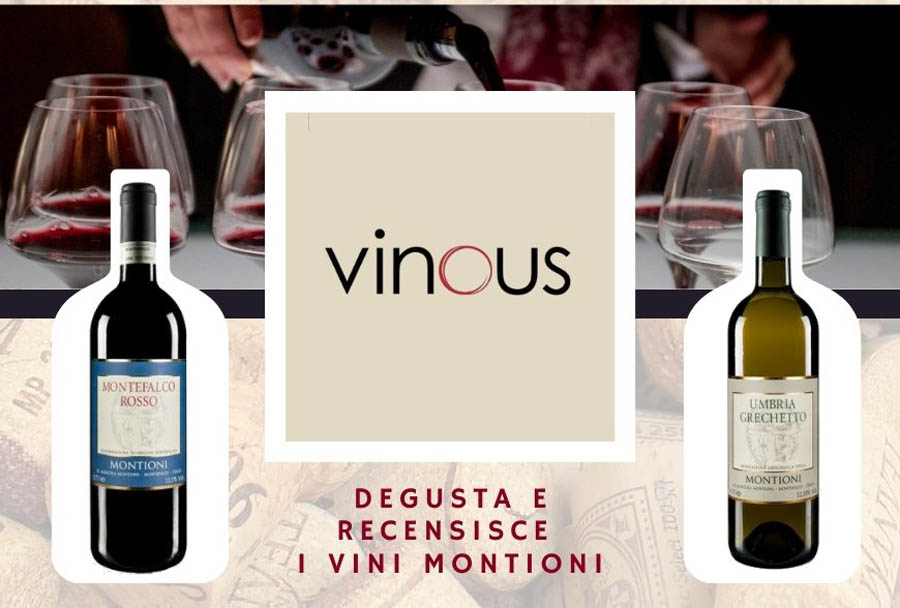
La prestigiosa pubblicazione internazionale Vinous conferisce grandi punteggi a due particolari produzioni vinicole marchiate Montioni
Il redattore italiano per Vinous Eric Guido, ha valutato col punteggio di 91 il Montefalco Rosso e di 88 l’Umbria Grechetto: due punteggi fantastici per la prima degustazione dei nostri prodotti da parte di questa prestigiosa pubblicazione enoica.
All’incrocio tra media e tecnologia, Vinous è la visione di Antonio Galloni di una moderna pubblicazione sul vino. Il team di rinomati critici e scrittori di Vinous offre una copertura approfondita di nuove uscite, retrospettive e verticali di vini più vecchi, video con produttori di vino, mappe interattive, consigli sui ristoranti e altro, il tutto pubblicato in un flusso continuo e quotidiano di articoli. Con l’acquisizione di Stephen Tanzer’s International Wine Cellar nel dicembre 2014 e l’aggiunta del team editoriale di IWC, Vinous ha esteso la copertura a tutte le principali regioni vinicole. Oggi Vinous ha abbonati in oltre 100 paesi ed è una delle pubblicazioni sul vino più rispettate al mondo.


Curiosi di conoscere le loro recensioni?
Proprio il redattore di Vinous, Eric Guido, si è occupato della degustazione dei vini Montioni in data giugno 2020.
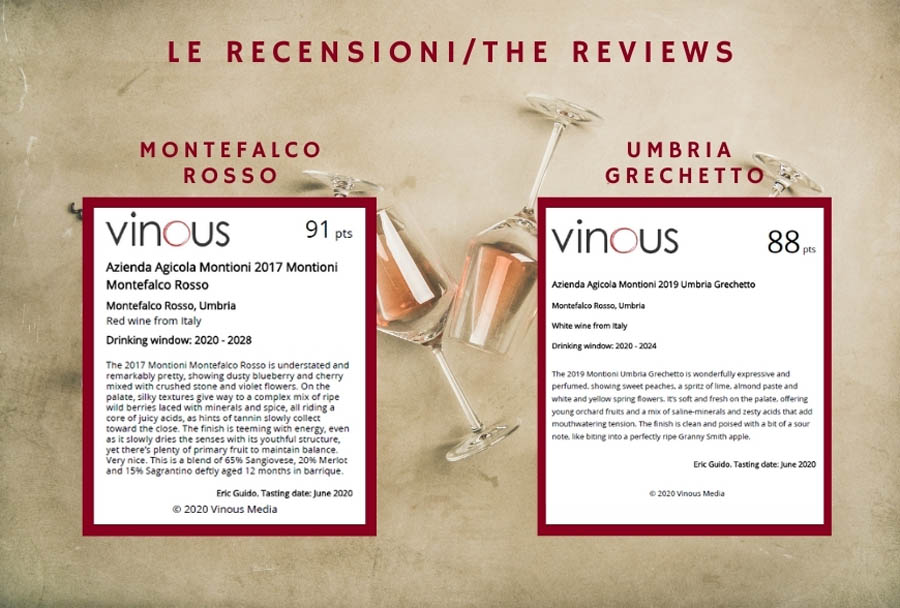
UMBRIA GRECHETTO 2019: 88 punti
Versione originale: “The 2019 Montioni Umbria Grechetto is wonderfully expressive and perfumed, showing sweet peaches, a spritz of lime, almond paste and white and yellow spring flowers. It’s soft and fresh on the palate, offering young orchard fruits and a mix of saline-minerals and zesty acids that add mouthwatering tension. The finish is clean and poised with a bit of a sour note, like biting into a perfectly ripe Granny Smith apple.”
Versione italiana: “Il Grechetto Umbria Montioni 2019 è meravigliosamente espressivo e profumato, con sentori di pesche dolci, uno spruzzo di lime, pasta di mandorle e fiori primaverili bianchi e gialli. Al palato è morbido e fresco, offrendo frutti giovani del frutteto e un mix di sali minerali e acidi piccanti che aggiungono tensione appetitosa. Il finale è pulito e armonioso con una nota leggermente acida, proprio come addentare una mela Granny Smith perfettamente matura.”
MONTEFALCO ROSSO MONTIONI 2017: 91 punti
Versione originale: “The 2017 Montioni Montefalco Rosso is understated and remarkably pretty, showing dusty blueberry and cherry mixed with crushed stone and violet fowers. On the palate, silky textures give way to a complex mix of ripe wild berries laced with minerals and spice, all riding a core of juicy acids, as hints of tannin slowly collect toward the close. The finish is teeming with energy, even as it slowly dries the senses with its youthful structure, yet there’s plenty of primary fruit to maintain balance. Very nice. This is a blend of 65% Sangiovese, 20% Merlot and 15% Sagrantino deftly aged 12 months in barrique.”
Versione italiana: “Il Montioni Montefalco Rosso 2017 è sobrio e straordinariamente gradevole, con mirtilli polverosi e ciliegia mescolati con pietra schiacciata e fiori di violetta. Al palato, le consistenze setose lasciano il posto a un complesso mix di frutti di bosco maturi intrecciati con sali nucleo di acidi succosi, mentre i sentori di tannino si raccolgono lentamente verso la chiusura. Il finale è pieno di energia, anche se asciuga lentamente i sensi con la sua struttura giovanile, ma c’è abbondanza di frutta primaria per mantenere l’equilibrio. Molto gradevole. Questo è un blend di Sangiovese 65%, Merlot 20% e Sagrantino 15% maturato abilmente 12 mesi in barrique.”
Il nostro punto di vista
Abbiamo ottenuto dei punteggio eccellenti per due vini che per la prima volta sono stati sotto esame da Vinous e appartenenti a un territorio meno conosciuto come il nostro!
Grazie a Vinous per aver degustato e recensito i nostri prodotti vinicoli!
On occasion, the winemaker may decide to leave them in if the grapes themselves contain less tannin than desired. This is more acceptable if the stems have ‘ripened’ and started to turn brown. If increased skin extraction is desired, a winemaker might choose to crush the grapes after destemming.
Wine is one of the most civilized things in the world and one of the most natural things of the world that has been brought to the greatest perfection, and it offers a greater range for enjoyment and appreciation than, possibly, any other purely sensory thing.
Ernest Hemingway Tweet
Removal of stems first means no stem tannin can be extracted. In these cases the grapes pass between two rollers which squeeze the grapes enough to separate the skin and pulp, but not so much as to cause excessive shearing or tearing of the skin tissues. In some cases, notably with “delicate” red varietals such as Pinot noir or Syrah, all or part of the grapes might be left uncrushed (called “whole berry”) to encourage the retention of fruity aromas through partial carbonic maceration.
The Grapes
The quality of the grapes determines the quality of the wine more than any other factor. Grape quality is affected by variety as well as weather during the growing season, soil minerals and acidity, time of harvest, and pruning method. The combination of these effects is often referred to as the grape’s terroir.
Grapes are usually harvested from the vineyard from early September until early November in the northern hemisphere, and mid February until early March in the southern hemisphere.
In some cool areas in the southern hemisphere, for example Tasmania, harvesting extends into May. The most common species of wine grape is Vitis Vinifera, which includes nearly all varieties of European origin. The most common species of wine grape is Vitis Vinifera, which includes nearly all varieties of European origin.

Manual harvesting is the hand-picking of grape clusters from the grapevines. In the United States, some grapes are picked into one- or two-ton bins for transport back to the winery. Manual harvesting has the advantage of using knowledgeable labor to not only pick the ripe clusters but also to leave behind the clusters that are not ripe or contain bunch rot or other defects. This can be an effective first line of defense to prevent inferior quality fruit from contaminating a lot or tank of wine.
Destemming is the process of separating stems from the grapes. Depending on the winemaking procedure, this process may be undertaken before crushing with the purpose of lowering the development of tannins and vegetal flavors in the resulting wine. Single berry harvesting, as is done with some German Trockenbeerenauslese, avoids this step altogether with the grapes being individually selected.
Crushing is the process when gently squeezing the berries and breaking the skins to start to liberate the contents of the berries. Destemming is the process of removing the grapes from the rachis (the stem which holds the grapes).
In traditional and smaller-scale wine making, the harvested grapes are sometimes crushed by trampling them barefoot or by the use of inexpensive small scale crushers. These can also destem at the same time. However, in larger wineries, a mechanical crusher/destemmer is used. The decision about destemming is different for red and white wine making. Generally when making white wine the fruit is only crushed, the stems are then placed in the press with the berries. The presence of stems in the mix facilitates pressing by allowing juice to flow past flattened skins.

Katerina Monroe
@katerinam • More Posts by Katerina
Congratulations on the award, it's well deserved! You guys definitely know what you're doing. Looking forward to my next visit to the winery!

