
Eric Guido di Vinous ha recensito i nostri vini… ma non solo!
E r i c G u i d o d i V i n o u s h a r e c e n s i t o i n o s t r i v i n i … m a n o n s o l o !

Circa due settimane fa Eric Guido, responsabile della revisione dei vini d’Italia per Vinous (una delle pubblicazioni sul vino più rispettate al mondo, soprattutto negli Stati Uniti), ha dedicato un suo articolo alle cantine meno conosciute dell’Umbria e del Lazio e dei vini che presto avranno la notorietà che meritano.
Tra questi vini Eric segnala il Sagrantino di Montefalco e di come i produttori umbri abbiano cercato di renderlo più interessante all’occhio (e ovviamente al palato) dei consumatori e degli amanti del vino, ottenendo un vino dal color rosso scuro, robusto e potente.
Rispetto a dieci anni fa, quest’anno Eric non ha trascurato le cantine locali meno famose, rimanendo colpito dall’egregio lavoro dei produttori di Sagrantino di Montefalco, tra i quali la nostra cantina.
Visitando l’Azienda Agricola Montioni, Eric ha deciso di recensire alcuni dei nostri vini, conferendo loro dei punteggi magnifici!


Al nostro Montefalco Sagrantino Ma.Gia D.O.C.G., annata 2015, ha conferito 93 punti e così lo ha definito:
“Il 2015 Montefalco Sagrantino Ma.Gia è come un caleidoscopio di bontà natalizia dal momento in cui si mette il naso nel bicchiere. All’interno si può trovare (profumo di) Cannella, pimento, chiodi di garofano, amarene, cioccolato fondente, menta dolce e tabacco. È setoso-liscio e carnoso nel tatto, tuttavia con acidità stimolante per equilibrare, bacche rosse e toni di erbe del bosco risuonano dappertutto. Il finale lungo e drammatico è solo leggermente strutturato, i tannini incorniciano bene l’esperienza senza mai entrare nel mezzo, e si assottiglia con una succosa spinta di frutta dolce e sentori di moka. Il Sagrantino Ma.Gia potrebbe essere un po’ uno showboat, ma è anche difficile resistere.”
(“The 2015 Montefalco Sagrantino Ma.Gia is like a kaleidoscope of Christmas goodness from the moment you put your nose to the glass. Cinnamon, allspice, clove, black cherries, dark chocolate, sweet mint and tobacco can all be found within. It’s silky-smooth and fleshy in feel, yet with stimulating acidity to balance, as mineral-tinged red berries and woodland herbal tones resonate throughout. The long and dramatic finale is only lightly structured, as fine tannins frame the experience nicely yet never get in the way, and tapers off with a juicy thrust of sweet fruit and hints of mocha. The Ma.Gia might be a bit of a showboat, but it’s also hard to resist.”)
Al nostro Montefalco Rosso Montioni 2018, invece, ha attribuito 90 punti:
“Il Montefalco Rosso 2018 è grazioso e delicato con un mix di frutti di bosco, erbe mentolate, fumo bianco e inflessioni viola. Questo vino è setoso nella texture ma sollevato in tatto, di colore rosso e sentori di frutta blu attraverso un nucleo solido di acidi e minerali. Si presenta asciutto con un rivestimento di tannino dolce che persiste, insieme a sentori di ciliegia, spezie esotiche e tabacco. Il 2018 è un assemblaggio di 65% Sangiovese, 20% Merlot e 15% Sagrantino che si affina in barrique per 12 mesi, gestito molto bene dal vino.”
(“The 2018 Montefalco Rosso is pretty and delicate with a mix of wild berries, minty herbs, white smoke and violet inflections. This is silky in texture yet lifted in feel, casting red and hints of blue fruit across a solid core of brisk acids and minerals. It tapers off classically dry with a coating of sweet tannin that lingers, along with hints of cherry, exotic spice and tobacco. The 2018 is a blend of 65% Sangiovese, 20% Merlot and 15% Sagrantino that refines in barriques for 12 months, which the wine handles very well.”)
Infine, al nostro Grechetto IGT Montioni 2020 ha assegnato 89 punti, descrivendolo:
“Il Grechetto 2020 è profumato con fiori speziati, melone aspro e toni agrumati. Questo lenisce con texture meravigliosamente morbide, diventando abbastanza salato e minerale. La mela verde e la ricchezza delle mandorle sono piuttosto lunghe, ma la nota finale è croccante e rinfrescante.”
(“The 2020 Grechetto is perfumed with spicy florals, sour melon and citrus tones. This soothes with wonderfully soft textures, becoming quite salty and mineral-like the more time you spend with it. Green apple and an almondy richness linger quite long, yet the end note here is crisp and refreshing.”)
Grazie Eric, ti aspettiamo l’anno prossimo! Ti faremo degustare volentieri le nuove annate dei nostri vini!
On occasion, the winemaker may decide to leave them in if the grapes themselves contain less tannin than desired. This is more acceptable if the stems have ‘ripened’ and started to turn brown. If increased skin extraction is desired, a winemaker might choose to crush the grapes after destemming.
Wine is one of the most civilized things in the world and one of the most natural things of the world that has been brought to the greatest perfection, and it offers a greater range for enjoyment and appreciation than, possibly, any other purely sensory thing.
Ernest Hemingway Tweet
Removal of stems first means no stem tannin can be extracted. In these cases the grapes pass between two rollers which squeeze the grapes enough to separate the skin and pulp, but not so much as to cause excessive shearing or tearing of the skin tissues. In some cases, notably with “delicate” red varietals such as Pinot noir or Syrah, all or part of the grapes might be left uncrushed (called “whole berry”) to encourage the retention of fruity aromas through partial carbonic maceration.
The Grapes
The quality of the grapes determines the quality of the wine more than any other factor. Grape quality is affected by variety as well as weather during the growing season, soil minerals and acidity, time of harvest, and pruning method. The combination of these effects is often referred to as the grape’s terroir.
Grapes are usually harvested from the vineyard from early September until early November in the northern hemisphere, and mid February until early March in the southern hemisphere.
In some cool areas in the southern hemisphere, for example Tasmania, harvesting extends into May. The most common species of wine grape is Vitis Vinifera, which includes nearly all varieties of European origin. The most common species of wine grape is Vitis Vinifera, which includes nearly all varieties of European origin.

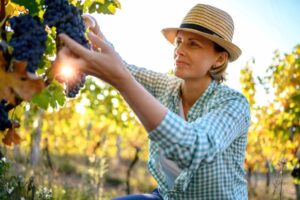
Manual harvesting is the hand-picking of grape clusters from the grapevines. In the United States, some grapes are picked into one- or two-ton bins for transport back to the winery. Manual harvesting has the advantage of using knowledgeable labor to not only pick the ripe clusters but also to leave behind the clusters that are not ripe or contain bunch rot or other defects. This can be an effective first line of defense to prevent inferior quality fruit from contaminating a lot or tank of wine.
Destemming is the process of separating stems from the grapes. Depending on the winemaking procedure, this process may be undertaken before crushing with the purpose of lowering the development of tannins and vegetal flavors in the resulting wine. Single berry harvesting, as is done with some German Trockenbeerenauslese, avoids this step altogether with the grapes being individually selected.
Crushing is the process when gently squeezing the berries and breaking the skins to start to liberate the contents of the berries. Destemming is the process of removing the grapes from the rachis (the stem which holds the grapes).
In traditional and smaller-scale wine making, the harvested grapes are sometimes crushed by trampling them barefoot or by the use of inexpensive small scale crushers. These can also destem at the same time. However, in larger wineries, a mechanical crusher/destemmer is used. The decision about destemming is different for red and white wine making. Generally when making white wine the fruit is only crushed, the stems are then placed in the press with the berries. The presence of stems in the mix facilitates pressing by allowing juice to flow past flattened skins.
Katerina Monroe
@katerinam • More Posts by Katerina
Congratulations on the award, it's well deserved! You guys definitely know what you're doing. Looking forward to my next visit to the winery!

