

Il vino Montioni scalza i big ultra centenari dell’Umbria con il suo Montefalco Rosso annata 2017!
Insieme a Wine Enthusiast ci immergiamo nel mare dei vini umbri, con una piacevole nonché ottima votazione ricevuta da uno dei nostri vini più tipici.
Wine Enthusiast è uno tra i più influenti magazine americani che si occupano di degustare e recensire vini da tutto il mondo.
Fondato nel 1988 a New York, assieme a Winemag.com, la sua versione online, ha un database con migliaia di vini, interviste e news su birre, liquori e altri temi similari.
In uno dei suoi viaggi attorno al mondo alla ricerca delle eccellenze del vino, la rivista non è potuta non passare per la magica Italia, lanciandosi in un tuffo profondo nei vini rossi della nostra Umbria.
Nel suo articolo, “A Deep Dive into the Red Wines of Italy’s Umbria” che potrete leggere interamente in lingua originale QUI, l’editrice Kerin O’Keefe, grande esperta di vini italiani (ne ha recensiti centinaia!) parla ampiamente del territorio umbro e dei suoi vini caratteristici.


Vini dell’Umbria, l’Italia da cercare (e da trovare!)
Tra i vini recensiti da Wine Enthusiast, in questo tour alla scoperta dei vini più tipici dell’Umbria, figurano tutte tra le più importanti cantine umbre da sempre conosciute e riconosciute in Italia e all’estero.
10 posti disponibili per 10 vini di diversa tipologia tra tutti i produttori del nostro territorio!
Uno dei vini più importanti della Cantina Montioni e del territorio di Montefalco (PG), il Montefalco Rosso raggiunge un punteggio stratosferico: 92 punti!!
In una classifica generale il nostro incredibile Montefalco Rosso Montioni annata 2017 raggiunge il podio con un terzo posto con 92 punti.
A voi la recensione del Montefalco Rosso Montioni effettuata da Wine Services per Wine Enthusiast, in lingua originale, con la nostra traduzione sotto:
Montioni 2017 Montefalco Rosso; $30, 92 POINTS.
Baked plum, coconut, toast, vanilla, nail polish and resin aromas mingle together on this brawny red. The solid palate shows French oak, roasted coffee bean and stewed prune alongside grainy tannins. You’ll also notice the heat of evident alcohol. Give the tannins another year or two to soften, then enjoy to capture the remaining fruit.
NG Wine Services.
Montioni 2017 Montefalco Rosso; 92 PUNTI.Aromi di prugna cotta, cocco, pane tostato, vaniglia, smalto e resina si mescolano in questo rosso intenso. Il gusto solido mostra rovere francese, chicchi di caffè tostato e prugna in umido accanto a tannini granulosi. Da notare anche il calore evidente dell’alcool. Dai ai tannini un altro anno o due per ammorbidire, quindi divertiti a catturare il sapore della frutta rimanente.
NG Wine Services.
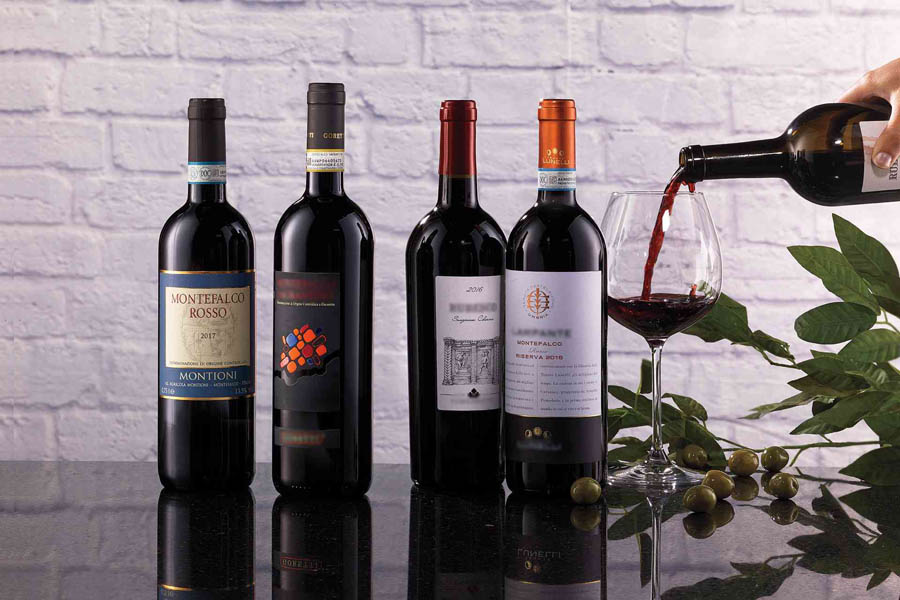
Noi della Cantina Montioni siamo fieri ed estremamente orgogliosi del risultato raggiunto!
Grazie agli amici di Wine Enthusiast per il punteggio che ci hanno attribuito!
Preciso al naso con l’impronta floreale ben viva rivela note di fiori di ibisco, fiori di agapanto e prugne blu. Corpo medio-pieno, tannini puliti e ben definiti nella matrice ed un finale limpido e ben equilibrato. Meglio dal 2022.
Decadente nel profilo sensoriale con note di fiori rossi, mirto selvatico, salvia e rosmarino. Corpo medio-pieno, tannini definiti ed egregiamente estratti ed un finale succoso e dall’ottima bevibilità. Meglio dal 2022.

Scheda tecnica
- Nome: Umbria Grechetto I.G.T. Montioni
- Tipologia: Vino bianco giovane
- Uve: Grechetto 100%
- Annata: 2021
- Temperatura di servizio: 10-12 °
- Gradazione alcolica: 13 % vol.
- Abbinamenti: Ideale per tutti i primi piatti, ottimo con pesce e carni bianche o semplicemente come aperitivo
- Consigli: Non necessita di pre-apertura prima dei pasti, ottimo in estate se mantenuto a temperature fresche.
Grazie al quotidiano online Italia a Tavola per il fantastico sondaggio!
Cin Cin davanti al mare a tutti!
On occasion, the winemaker may decide to leave them in if the grapes themselves contain less tannin than desired. This is more acceptable if the stems have ‘ripened’ and started to turn brown. If increased skin extraction is desired, a winemaker might choose to crush the grapes after destemming.
Wine is one of the most civilized things in the world and one of the most natural things of the world that has been brought to the greatest perfection, and it offers a greater range for enjoyment and appreciation than, possibly, any other purely sensory thing.
Ernest Hemingway Tweet
Removal of stems first means no stem tannin can be extracted. In these cases the grapes pass between two rollers which squeeze the grapes enough to separate the skin and pulp, but not so much as to cause excessive shearing or tearing of the skin tissues. In some cases, notably with “delicate” red varietals such as Pinot noir or Syrah, all or part of the grapes might be left uncrushed (called “whole berry”) to encourage the retention of fruity aromas through partial carbonic maceration.
The Grapes
The quality of the grapes determines the quality of the wine more than any other factor. Grape quality is affected by variety as well as weather during the growing season, soil minerals and acidity, time of harvest, and pruning method. The combination of these effects is often referred to as the grape’s terroir.
Grapes are usually harvested from the vineyard from early September until early November in the northern hemisphere, and mid February until early March in the southern hemisphere.
In some cool areas in the southern hemisphere, for example Tasmania, harvesting extends into May. The most common species of wine grape is Vitis Vinifera, which includes nearly all varieties of European origin. The most common species of wine grape is Vitis Vinifera, which includes nearly all varieties of European origin.

Manual harvesting is the hand-picking of grape clusters from the grapevines. In the United States, some grapes are picked into one- or two-ton bins for transport back to the winery. Manual harvesting has the advantage of using knowledgeable labor to not only pick the ripe clusters but also to leave behind the clusters that are not ripe or contain bunch rot or other defects. This can be an effective first line of defense to prevent inferior quality fruit from contaminating a lot or tank of wine.
Destemming is the process of separating stems from the grapes. Depending on the winemaking procedure, this process may be undertaken before crushing with the purpose of lowering the development of tannins and vegetal flavors in the resulting wine. Single berry harvesting, as is done with some German Trockenbeerenauslese, avoids this step altogether with the grapes being individually selected.
Crushing is the process when gently squeezing the berries and breaking the skins to start to liberate the contents of the berries. Destemming is the process of removing the grapes from the rachis (the stem which holds the grapes).
In traditional and smaller-scale wine making, the harvested grapes are sometimes crushed by trampling them barefoot or by the use of inexpensive small scale crushers. These can also destem at the same time. However, in larger wineries, a mechanical crusher/destemmer is used. The decision about destemming is different for red and white wine making. Generally when making white wine the fruit is only crushed, the stems are then placed in the press with the berries. The presence of stems in the mix facilitates pressing by allowing juice to flow past flattened skins.

Katerina Monroe
@katerinam • More Posts by Katerina
Congratulations on the award, it's well deserved! You guys definitely know what you're doing. Looking forward to my next visit to the winery!

