

Un Sagrantino apprezzato in tutto il mondo – Il Corriere dell’Umbria
La nostra Azienda Agricola Montioni, è stata scelta dal Corriere dell’Umbria come esempio di eccellenza della regione, dedicandoci un articolo con intervista esclusivo!
L’intervista si trova all’interno della sezione “L’Umbria che eccelle”, che rappresenta la storia, la cultura e le aziende più meritevoli dell’Umbria.
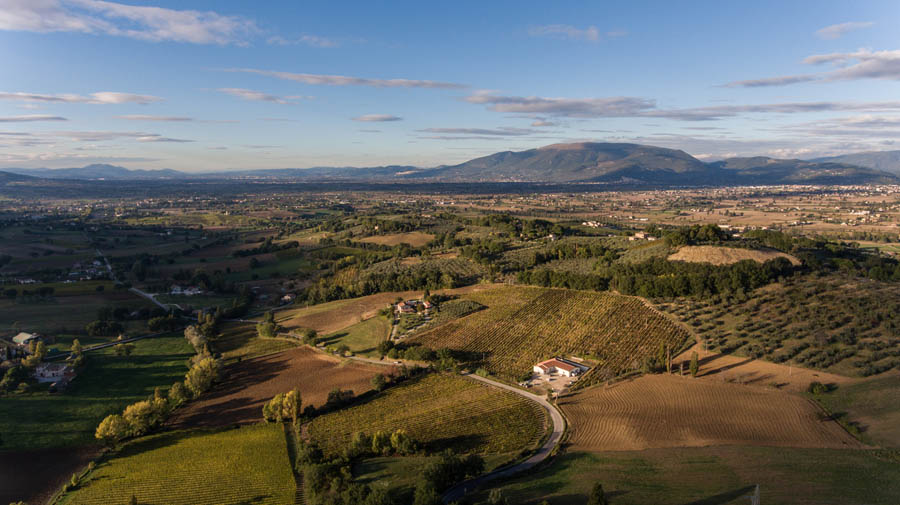
Nell’articolo e nel video a noi dedicato, la giornalista Cristiana Costantini ha trattato con Paolo Montioni, diversi temi relativi alla nostra Azienda Agricola: il nostro Sagrantino di Montefalco e Sagrantino Ma.Gia, il territorio di Montefalco dove sono ubicati la nostra cantina e il nostro frantoio, i nostri progetti futuri…molto interessanti!


Potete visualizzare direttamente l’articolo QUI, assieme al video dell’intervista a Paolo Montioni!
Ecco qui riportato l’articolo completo, tratto dalla versione online de “Il Corriere dell’Umbria”
“La magia è vedere immense distese di vigneti che cambiano colori e sfumature con l’andare delle stagioni. E’ osservare i grappoli d’uva acerbi che maturano al sole, diventano dolci, succosi e con il loro profumo inebriano le colline abitate dagli ulivi secolari che si affacciano sull’Umbria. MA.GIA è anche il nome di un pregiatissimo Sagrantino prodotto dall’azienda agricola Montioni di Montefalco, che vanta 92 punti assegnati dalla Wine Enthusiast, rivista americana di fama internazionale. “E’ un ambizioso progetto enologico avviato nel 2015, la migliore annata degli ultimi 20 anni, ma è anche un segno d’amore nei confronti della nostra famiglia”, afferma il titolare dell’azienda Paolo Montioni, insieme alla moglie Sara. MA.GIA è il nickname che abbiamo dato ad una delle due tipologie di Sagrantino che produciamo, quello Gold Label, etichetta d’oro. Un termine che nasce dall’unione delle iniziali dei nomi dei nostri figli, Matteo e Giacomo, che spero rappresentino la quarta generazione dell’azienda”, spiega.
Si tratta di un “single vignard”, cioè un vino proveniente da un unico vigneto, come da filosofia dei grandi produttori di vino francesi e dei lungimiranti viticoltori italiani, soprattutto toscani e piemontesi. “E’ l’eccellenza del nostro territorio. Sono i migliori grappoli d’uva, selezionati a mano, del nostro miglior vigneto che si trova nella frazione di Pietrauta”, dice l’imprenditore, che aggiunge: “E’ un luogo protetto dalle montagne, vocato alla produzione di un vino di pregio grazie alla particolare composizione del suolo e all’ottimale esposizione al sole e ai venti. Ne deriva un prodotto impossibile da imitare”. MA.GIA. è un vino elegante e rotondo, prodotto in quantità limitata – circa duemila bottiglie l’anno – che richiama gli odori e i sapori dell’Umbria: “Il terreno bagnato, l’aroma del tartufo nero e dei porcini, i profumi del sottobosco. E’ un vino da valorizzazione, esibito nelle sue cassette di legno, per le occasioni speciali. E’ il più ambito dai nostri clienti, dedicato ad un mercato emozionale”, dice Montioni. Il Gold Label di Montefalco è presente nella cantina dell’avvocato personale di Donald Trump, in quella dell’attrice Meryl Streep e di tanti altri illustri personaggi. “Il secondo Sagrantino è il Black Label, etichetta nera, anche questo frutto di uno scrupoloso lavoro in vigna”, dichiara l’imprenditore, che prosegue: “La raccolta, totalmente manuale, è tardiva – viene effettuata ad ottobre – e la fermentazione è naturale. Il suo sapore, dal tannino pronunciato ma non aggressivo, richiama l’inverno: la prugna matura, il tabacco, il pepe nero. Profumi caratteristici della nostra regione”. Un vino che si sposa con i prodotti della tradizione gastronomica nazionale ed internazionale: cacciagione e bruschette in Italia, carne d’anatra in Polonia, meatballs (polpette di carne) in America, ad esempio.
I prodotti Montioni vengono esportati, per il 90%, in dieci Paesi del mondo: Portorico, Lussemburgo, Canada, Belgio, America, Germania, Olanda, Polonia, Svizzera, Danimarca. “I nostri vini sono apprezzati ovunque soprattutto nell’isola caraibica di Portorico, cosiddetta 51esima stella degli Usa, dove è presente nei più famosi resort extra lusso”, afferma. L’azienda agricola Montioni produce anche olio extravergine d’oliva: 3mila piante d’ulivo, un frantoio di proprietà con macchinari di ultima generazione, per un olio moraiolo estratto a freddo dalle note di amaro e piccante ben equilibrate.”
Cristiana Costantini
Curiosi di scoprire di più dei vini di cui si è parlato nell’intervista?
Potete leggere di più sulle loro caratteristiche e acquistarli online qui:
> Sagrantino di Montefalco DOCG
> Sagrantino Ma.Gia in EDIZIONE LIMITATA!
Preciso al naso con l’impronta floreale ben viva rivela note di fiori di ibisco, fiori di agapanto e prugne blu. Corpo medio-pieno, tannini puliti e ben definiti nella matrice ed un finale limpido e ben equilibrato. Meglio dal 2022.
Decadente nel profilo sensoriale con note di fiori rossi, mirto selvatico, salvia e rosmarino. Corpo medio-pieno, tannini definiti ed egregiamente estratti ed un finale succoso e dall’ottima bevibilità. Meglio dal 2022.

Scheda tecnica
- Nome: Umbria Grechetto I.G.T. Montioni
- Tipologia: Vino bianco giovane
- Uve: Grechetto 100%
- Annata: 2021
- Temperatura di servizio: 10-12 °
- Gradazione alcolica: 13 % vol.
- Abbinamenti: Ideale per tutti i primi piatti, ottimo con pesce e carni bianche o semplicemente come aperitivo
- Consigli: Non necessita di pre-apertura prima dei pasti, ottimo in estate se mantenuto a temperature fresche.
Grazie al quotidiano online Italia a Tavola per il fantastico sondaggio!
Cin Cin davanti al mare a tutti!
On occasion, the winemaker may decide to leave them in if the grapes themselves contain less tannin than desired. This is more acceptable if the stems have ‘ripened’ and started to turn brown. If increased skin extraction is desired, a winemaker might choose to crush the grapes after destemming.
Wine is one of the most civilized things in the world and one of the most natural things of the world that has been brought to the greatest perfection, and it offers a greater range for enjoyment and appreciation than, possibly, any other purely sensory thing.
Ernest Hemingway Tweet
Removal of stems first means no stem tannin can be extracted. In these cases the grapes pass between two rollers which squeeze the grapes enough to separate the skin and pulp, but not so much as to cause excessive shearing or tearing of the skin tissues. In some cases, notably with “delicate” red varietals such as Pinot noir or Syrah, all or part of the grapes might be left uncrushed (called “whole berry”) to encourage the retention of fruity aromas through partial carbonic maceration.
The Grapes
The quality of the grapes determines the quality of the wine more than any other factor. Grape quality is affected by variety as well as weather during the growing season, soil minerals and acidity, time of harvest, and pruning method. The combination of these effects is often referred to as the grape’s terroir.
Grapes are usually harvested from the vineyard from early September until early November in the northern hemisphere, and mid February until early March in the southern hemisphere.
In some cool areas in the southern hemisphere, for example Tasmania, harvesting extends into May. The most common species of wine grape is Vitis Vinifera, which includes nearly all varieties of European origin. The most common species of wine grape is Vitis Vinifera, which includes nearly all varieties of European origin.

Manual harvesting is the hand-picking of grape clusters from the grapevines. In the United States, some grapes are picked into one- or two-ton bins for transport back to the winery. Manual harvesting has the advantage of using knowledgeable labor to not only pick the ripe clusters but also to leave behind the clusters that are not ripe or contain bunch rot or other defects. This can be an effective first line of defense to prevent inferior quality fruit from contaminating a lot or tank of wine.
Destemming is the process of separating stems from the grapes. Depending on the winemaking procedure, this process may be undertaken before crushing with the purpose of lowering the development of tannins and vegetal flavors in the resulting wine. Single berry harvesting, as is done with some German Trockenbeerenauslese, avoids this step altogether with the grapes being individually selected.
Crushing is the process when gently squeezing the berries and breaking the skins to start to liberate the contents of the berries. Destemming is the process of removing the grapes from the rachis (the stem which holds the grapes).
In traditional and smaller-scale wine making, the harvested grapes are sometimes crushed by trampling them barefoot or by the use of inexpensive small scale crushers. These can also destem at the same time. However, in larger wineries, a mechanical crusher/destemmer is used. The decision about destemming is different for red and white wine making. Generally when making white wine the fruit is only crushed, the stems are then placed in the press with the berries. The presence of stems in the mix facilitates pressing by allowing juice to flow past flattened skins.
Katerina Monroe
@katerinam • More Posts by Katerina
Congratulations on the award, it's well deserved! You guys definitely know what you're doing. Looking forward to my next visit to the winery!

